A FIELD GUIDE TO REAL BREAD
The Living Loaf.
For ten thousand years, bread was alive. Then we taught it to rise in an hour, and forgot what it was for. This is what slow fermentation gives back — to the loaf, and to you.
24h+
SLOW FERMENT
0
COMMERCIAL YEAST
3
PURE INGREDIENTS
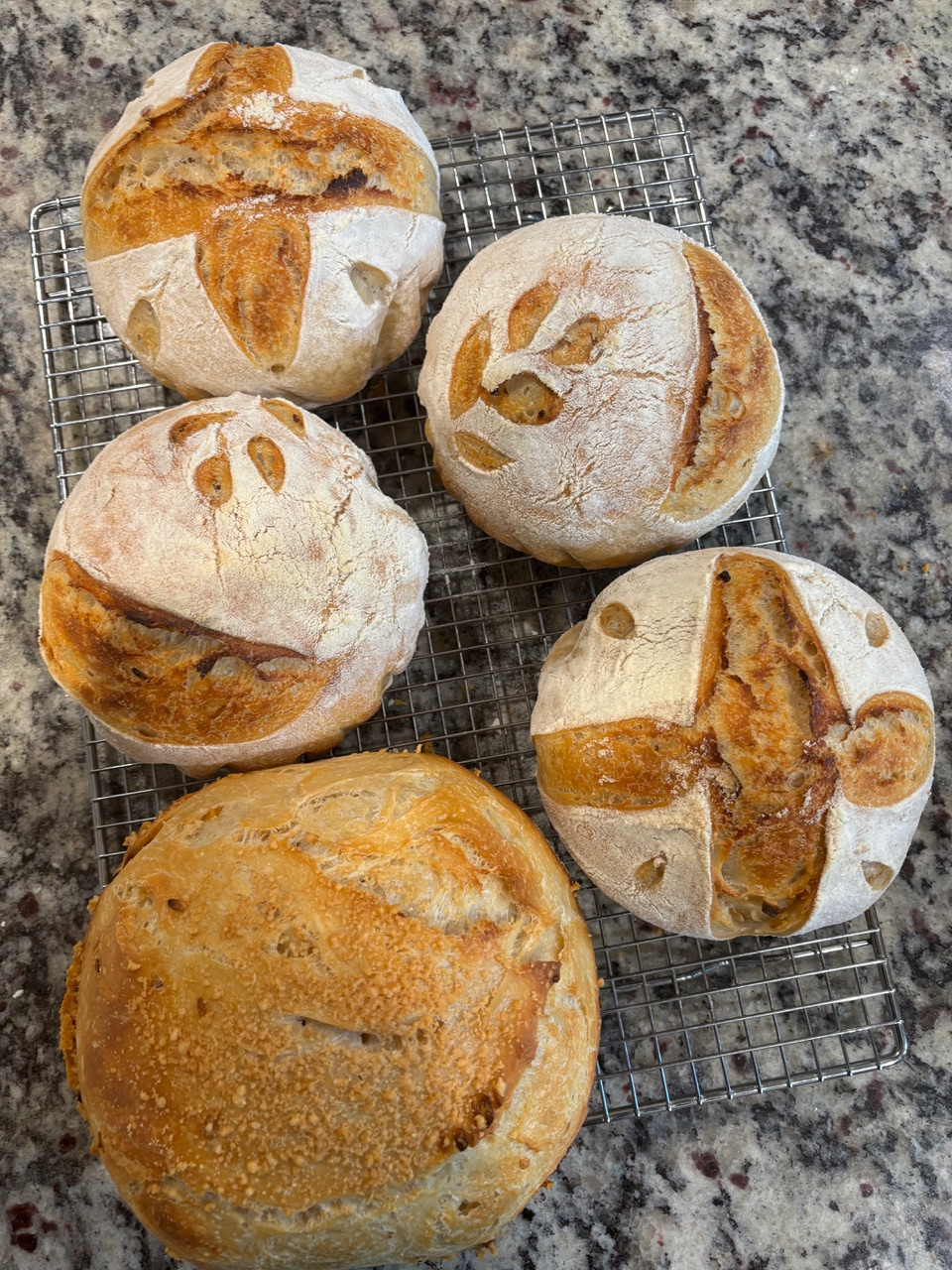
Made the long way
on purpose.
FROM THE KITCHEN, 4:30AM
A QUIET REVIVAL
M
ost of what's sold as bread today isn't, really. It's flour mixed with industrial yeast, dough conditioners, and emulsifiers — proofed in under two hours and on shelves the same day.
Naturally leavened sourdough is the older way. A wild culture of yeast and lactic acid bacteria, fed and patient, doing the slow work that transforms simple flour into something the body recognizes as food.
The benefits aren't marketing. They're the byproducts of fermentation — chemistry humans have leaned on since before written history, now newly confirmed by labs in Italy, France, and the Mayo Clinic.
SECTION I · THE BENEFITS
Six gifts of true fermentation.
01
Easier on the gut.
Long fermentation lets wild bacteria pre-digest the gluten and starches that strain modern stomachs. Many people who feel bloated by commercial bread tolerate naturally leavened sourdough without issue. The bacteria do the breaking-down so your body doesn't have to.
DIGESTION · MICROBIOME
02
A gentler blood sugar curve.
Sourdough has a measurably lower glycemic index than fast-risen breads. The acids produced during fermentation slow how quickly carbohydrates convert to glucose — meaning steadier energy, fewer crashes, and a friendlier loaf for anyone watching insulin response.
METABOLISM · ENERGY
03
Nutrients unlocked, not hidden.
Whole grains contain phytic acid, a compound that binds to minerals and blocks their absorption. Long sourdough fermentation neutralizes it — releasing the iron, zinc, magnesium, and B vitamins the grain held in reserve, and making them bioavailable to you.
BIOAVAILABILITY · MINERALS
04
A clean three-ingredient label.
Flour. Water. Salt. That's the entire recipe. No commercial yeast, no dough conditioners, no preservatives, no sugar, no seed oils. If you can't pronounce it, it isn't in this loaf — which makes the bread a rare honest thing in a category built on shortcuts.
CLEAN LABEL · WHOLE FOOD
05
Prebiotics for the microbiome.
Fermentation produces compounds that feed the beneficial bacteria already living in your gut. A healthier microbiome is increasingly linked to immunity, mood, and inflammation control. Eating sourdough is one of the simplest ways to feed the microbes that keep you feeling well.
GUT HEALTH · IMMUNITY
06
Stays fresh without chemistry.
The mild acidity that gives sourdough its tang also acts as a natural preservative — keeping mold at bay and the crumb tender for days, no calcium propionate required. Real bread doesn't need a chemistry set to last the week.
NATURAL PRESERVATION
Bread is the warmest, kindest of all words. Write it always with a capital letter, like your own name.
— RUSSIAN PROVERB
SECTION II · SIDE BY SIDE
Two breads. Same name. Different things entirely.
INDUSTRIAL BREA
Sliced & Bagged
-
Risen in 1–2 hours with commercial yeast
-
Twenty-plus ingredients including conditioners
-
Phytic acid intact — minerals locked away
-
High glycemic spike
-
Preservatives for shelf stability
-
Soft crumb, no character
THE FINAL RYZE
Naturally Leavened
-
Fermented 24+ hours with wild starter
-
Three ingredients — flour, water, salt
-
Phytates broken down, minerals freed
-
Lower, slower glucose response
-
Acid-preserved, no chemistry required
-
Open crumb, blistered crust, real flavor
SECTION III · THE SLOW WAY
A loaf measured in days, not minutes.
Day 1
FEED THE STARTER
Wild yeast and bacteria, kept alive on a counter for years, are woken with fresh flour and water.
MIX & REST
Flour, water, salt. Folded by hand and left to develop strength through long, gentle stretches.
Day 2
COLD FERMENT
Twelve to eighteen hours in the refrigerator. This is where the flavor — and the health — is made.
BAKE & COOL
Commercial stone bread oven for steam, crust, and the deep crackle of bread that's truly alive.
SECTION IV · HONEST QUESTIONS
What people actually want to know.
Many people with non-celiac gluten sensitivity report tolerating naturally leavened sourdough far better than commercial bread, because long fermentation breaks down a meaningful portion of the gluten proteins. That said, sourdough is not gluten-free and is not safe for those with celiac disease. If you have celiac, please don't take the risk.
The carb count is similar to other bread, but how your body processes those carbs is different. The lactic acid produced during fermentation slows glucose absorption, producing a flatter blood sugar response. Same numbers on the label; gentler effect on the body
A loaf takes 36 to 48 hours from start to finish, uses high-quality flour, and is shaped and scored by hand. There's no industrial yeast accelerating the process and no fillers cutting the cost. You're paying for time, attention, and ingredients that haven't been compromised.
Cut-side down on the counter, in a paper or linen bag — never plastic, which traps moisture and softens the crust. Good for three to five days at room temperature. For longer storage, slice and freeze; toast directly from frozen.
All of our breads — plain, whole wheat, italian, cheddar, gouda, blueberry, french toast, cinnamon — are built on the same naturally leavened base. The fermentation benefits carry through to every loaf. The additions are just what we fold in at the end.
Information on this page is intended for general education and is not medical advice. If you have a diagnosed condition such as celiac disease or diabetes, please consult your healthcare provider before changing your diet.